
Building a Sanitation Market
The strategy reshaping sanitation from the ground up
It’s evening in Guijá, Mozambique.
Golden light filters through the smoke of cooking fires as children play soccer and cattle wander in the red dirt.
Three months ago, this district was underwater.
Heavy rains pushed the Limpopo River over its banks, unleashing the worst flooding people here had seen in decades.
For a community that depends on agriculture to survive, the floods were disastrous. But for people in Guijá like Lúcia and her granddaughter Leah, they also revealed something unexpected: hope.
Lúcia’s toilet withstood the flooding for the first time.
For most of her life, Lúcia did not have a latrine, and she would have to walk long distances to find a place in the bush to relieve herself. As she grew older, this became increasingly difficult due to the pain she experiences while walking. The traditional latrines her family built were not made of materials durable enough to withstand the rainy season. They had to be rebuilt over and over.
“With these recent heavy rains, we would no longer have a latrine; it would have collapsed,” Lúcia remembers.
But this latrine was different. It was built to last, through a new approach World Vision recently brought to Guijá.
“This is why I say thank you, may God bless you.”
Mozambique is one of 42 countries within World Vision’s 2026–2030 Global WASH Business Plan.
Guijá is a district in Gaza province, in southern Mozambique, where World Vision is improving access to dignified sanitation.
Guijá is located along the Limpopo River in one of Mozambique’s most flood-prone areas. Loamy, collapsing soil, heavy rains, and cyclones make it incredibly difficult for infrastructure like latrines to remain standing.
When World Vision began sanitation work in Guijá in 2024, the community still practiced open defecation. This spread disease and created numerous health risks. Only 18% of families in the area had basic sanitation.
These issues are not unique to Guijá.
Today, around the world...
1 in 5
people lack basic sanitation
(lack toilet access, use unsafe toilets, or share one neighborhood toilet)
Source: WHO/UNICEF Joint Monitoring Programme, 2025
1 in 5
people lack basic hygiene
(lack access to a handwashing facility with soap and water at home)
1 in 23
people practice open defecation
(relieve themselves outdoors)
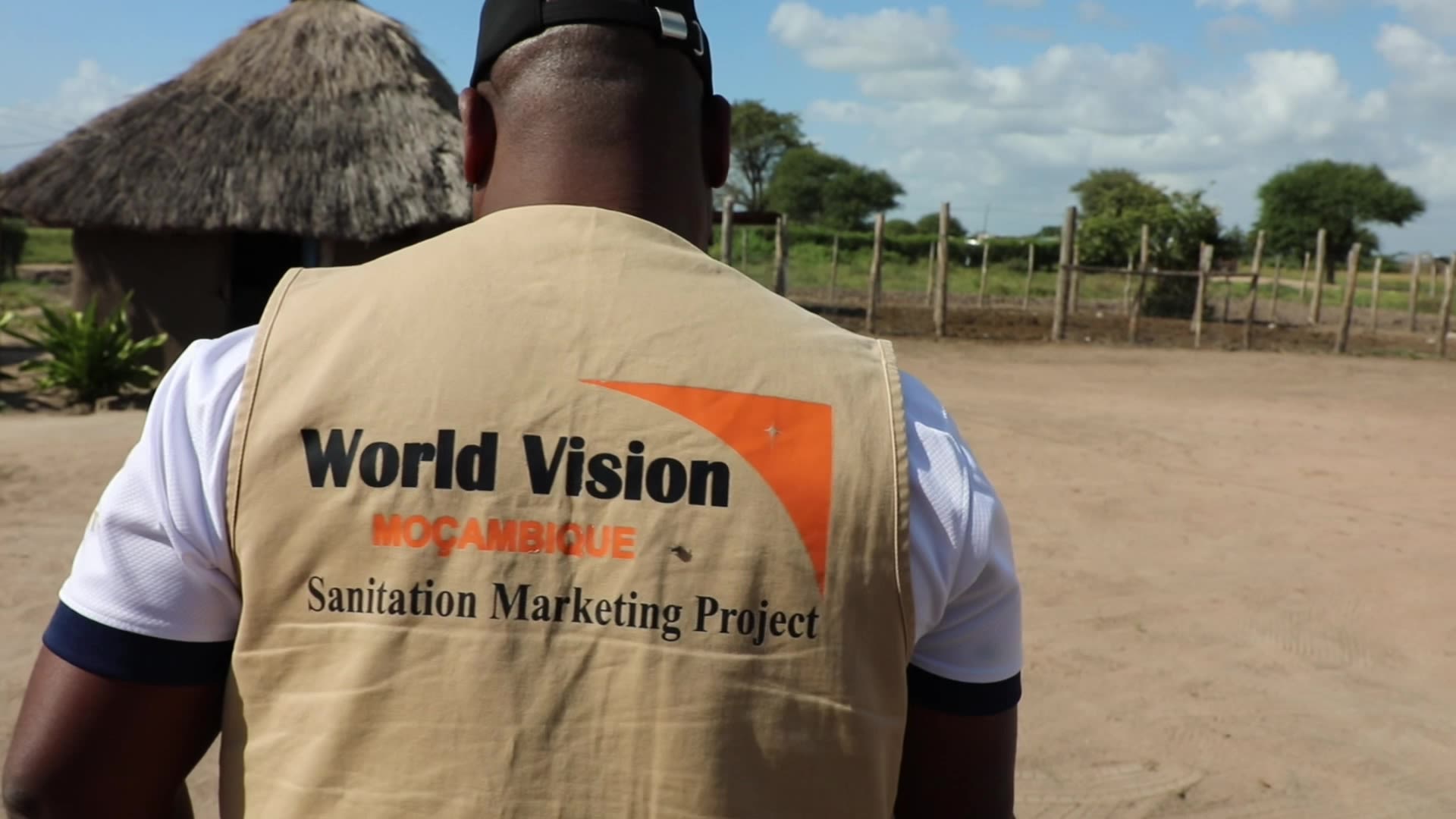
What is the Markets for Sanitation approach?
Along with technical partner iDE (International Development Enterprises), World Vision helps people buy higher-quality toilets, hiring skilled masons and using sturdier materials than they would typically use on their own.
The Markets for Sanitation approach treats people as customers rather than aid recipients. It works to support a sanitation market where improved latrines are affordable and accessible for all community members.
This improved latrine in Guijá was constructed through the Markets for Sanitation approach.
This improved latrine in Guijá was constructed through the Markets for Sanitation approach.
An improved latrine is durable and safely separates human waste, using features like a cement slab and lined pit to keep out flies, contain odor, and protect the water supply. It stops waste from spreading disease through a community and can withstand climate shocks.
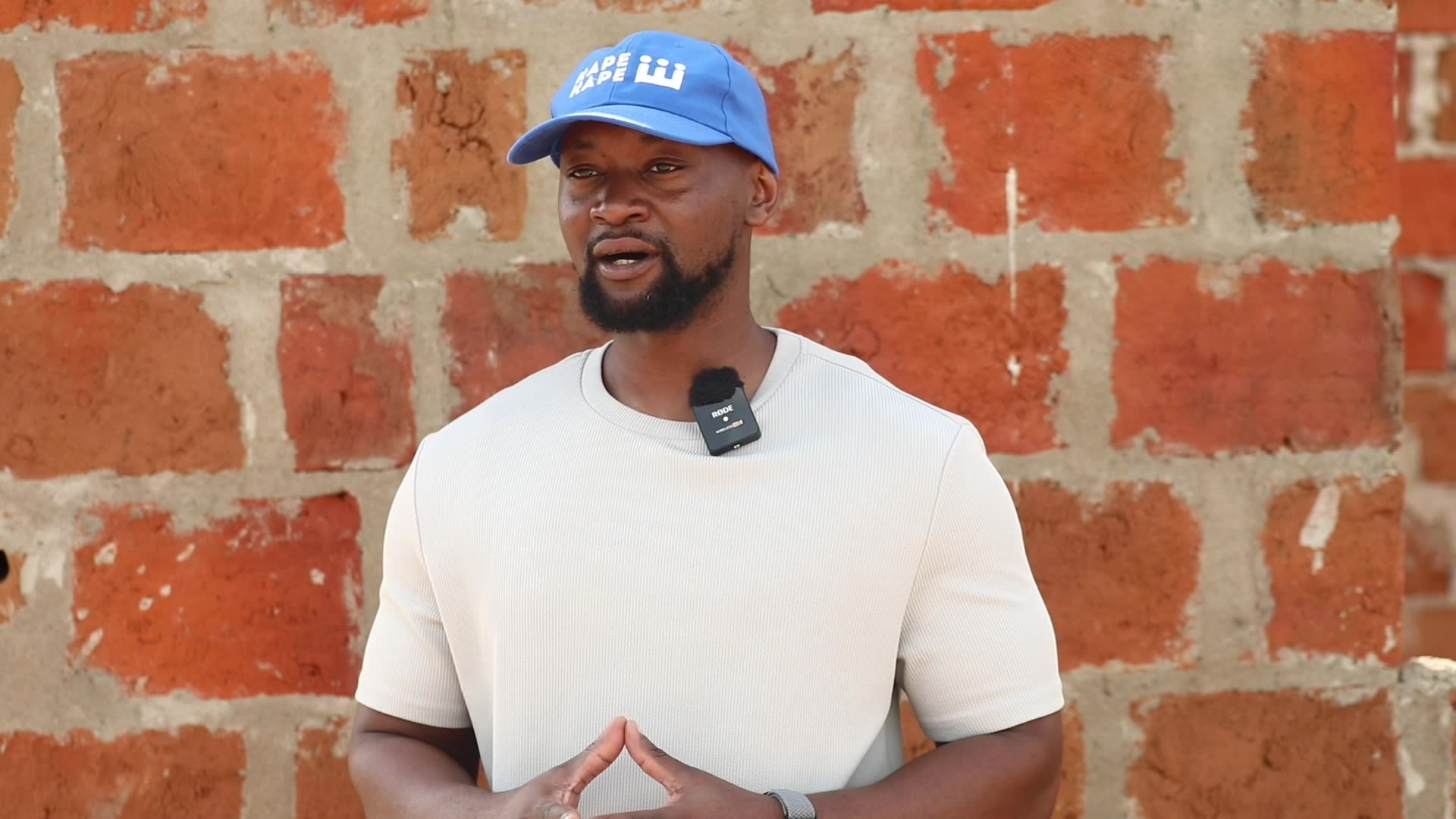
Nashe Chigodora, iDE representative, explains Markets for Sanitation
“All latrines built through World Vision's sanitation marketing approach withstood the flooding. In contrast, all the traditional latrines were destroyed.”
Repsino Tivan
World Vision WASH Area Coordinator
So what does a sanitation market look like in a place like Guijá, Mozambique?
World Vision and iDE trained local sales agents, retailers, and masons to sell, stock, and build latrines that are durable and cost-effective.
All these actors need to be linked together to create a sustainable market.
The sanitation journey begins with a family in need of an improved latrine.
It can be hard for some families to afford improved latrines because the durable materials come at a higher cost. With the help of savings groups, households are able to save for a latrine over time. World Vision also provides financing solutions like affordable loans and subsidies to make quality sanitation attainable.
Since 2024, 365 families in Guijá have received subsidies, and 71 household loans have been provided to make improved sanitation affordable.
The family is approached by a sanitation sales agent.
The agent connects with the family on a personal level, sharing about their own experience with sanitation challenges. They contrast the benefits of owning a latrine with the costs of open defecation. They also offer the family different latrine options based on cost, providing them with choice and agency in the process.
Arone and Milagrosa’s Story
Arone is a pastor in Guijá.
“If we built a latrine, during heavy rains it could collapse within a week. We suffered a great deal,” Arone remembers. “In a single year, we could build up to 10 latrines.”
In 2024, Arone’s wife Milagrosa went through World Vision’s training to become an agent. Sales agents go door to door selling latrines. Naturally, Milagrosa’s first customer was her husband.
“She managed to convince me to join the project after showing me the latrine designs,” Arone remembers.
Arone participated in one of World Vision’s first sanitation savings groups in the community so he could afford a latrine. Members contribute each month and take turns receiving the pooled funds.
“I would like to continue advocating with families until everyone has access to latrines, especially low income households.”
“Since we purchased the latrine, a lot has changed. We no longer suffer from bad smells. In fact, the situation is so good now that I could even eat inside,” Arone says, laughing.
Milagrosa agrees. “I am happy now, because before, flies would land on feces and then on children’s food while they were eating, causing illness,” she says.
After the family has decided to purchase a latrine, the sales agent then visits a retailer and receives their commission.
The retailer creates and sells the materials needed to construct the latrine. World Vision supports retailers to expand their current business to include sanitation products and services. When materials for latrines are locally sourced, demand is sustained within the community.
Lucas Francisco Baloi is a retailer who produces and sells cement blocks and circular slabs. When World Vision approached him and proposed a partnership to create sanitary slabs for latrines, he agreed.
“I never thought I would build an improved latrine,” Lucas reflects. “In the past, we would dig a pit without lining it, place sticks on top and then cover it with soil. It would easily collapse and we would rebuild it again and again. World Vision showed us how to build a resilient latrine that's properly reinforced.”
Today, Lucas' business is growing, and there is high demand from those who want to build latrines.
“I feel that my work is useful to the community, and this is my main source of income for supporting my family.”
Masons use the materials from the retailer to build the latrine.
A small team of masons dig a pit, line it, and install the improved latrine next to the family's home. They are paid a commission for each latrine they build.
The project prioritizes training female entrepreneurs, empowering them to support their families and inspire change in their communities.
Amelia is known in the community as a hard worker. She has three children and a grandchild. Her husband passed away 10 years ago, leaving her as the sole provider for her family. Before she became a mason, Amelia worked in the fields. It was difficult to earn a stable income because of droughts and heavy rains.
When she heard about the sanitation market, she decided to train to be a mason in order to buy cattle and support her children’s education, so they could attend university.
“I advise other women not to depend only on their husbands,” Amelia says. “In the past, I thought only men could do this type of work, but after training I understand that I can also do it.”
In the past few years, she has witnessed the ripple effects of the Markets for Sanitation work throughout her community.
“[Improved sanitation] is very important for us, as diarrheal diseases have greatly reduced. In the past, cholera was very common, but now it is different because most people already have latrines.”
Amelia bought materials and built a latrine for her family this year.
“Now my family’s dignity is assured. When we receive visitors and someone needs to use the toilet, I no longer feel ashamed.”
The Future of Sanitation
By helping local markets grow, the Markets for Sanitation approach allows entrepreneurs like Milagrosa, Lucas, and Amelia to earn a stable income. Climate-resilient latrines save families money instead of forcing them to rebuild again and again.
“The main objective of building a market is that years down the line, without the intervention of World Vision or iDE, the work continues. If everyone is making a profit, it's sustainable.”
Today, over 2,600 improved latrines have been constructed through World Vision's sanitation marketing approach in Guijá and the neighboring Mabalane district. (2024–2026)
This number is only the beginning. Because of the sanitation market, when next year's heavy rains come, Guijá's new latrines will still be standing.
Through World Vision programming, 35 million people have gained access to water, 26 million have gained access to sanitation, and 41 million have gained access to hygiene services in the past decade (2016–2026).
This story is part of an ongoing series highlighting different Place-Based Initiatives within World Vision’s Global WASH Business Plan.
Special thanks to the World Vision team in Mozambique for their partnership and contributions to this story.
 Built with Shorthand